
Turkish cuisine ranks among the world’s finest, and for many visitors the food alone justifies the trip. It draws on Ottoman palace cooking, Mediterranean produce, Central Asian roots and Middle Eastern influences, all filtered through a culture that treats eating as something to be shared and savoured. Wherever you travel, you will eat well.
Kebabs, and much more
The kebab is the dish most associated with Turkey abroad, and the reality is far richer than the takeaway version suggests. Döner turns on its vertical spit, carved thin; şiş is grilled on skewers; Adana is a spiced minced-lamb kebab from the south; and İskender layers sliced döner over bread with tomato sauce and yoghurt. Each region has its own specialities and its own fierce loyalties.
But kebabs are only the beginning. A meal often opens with meze, a spread of small cold and hot dishes — stuffed vine leaves, smoky aubergine, yoghurt dips, beans and more — designed for grazing and conversation. Then there is pide, the boat-shaped flatbread often called Turkish pizza; lahmacun, a thin, crisp round topped with spiced meat; börek, flaky layered pastry filled with cheese or meat; and köfte, grilled or fried meatballs found in countless local forms.
The legendary breakfast
If one meal captures the spirit of Turkish food, it is kahvaltı, the breakfast. It is less a dish than an event: a table filled with white cheeses and matured ones, green and black olives, eggs cooked several ways, sliced tomatoes and cucumbers, honey and clotted cream, jams, savoury pastries and warm bread — all washed down with glass after glass of tea. Eaten slowly and shared among friends or family, a proper kahvaltı can stretch across a whole morning and is not to be missed.
Food by the sea
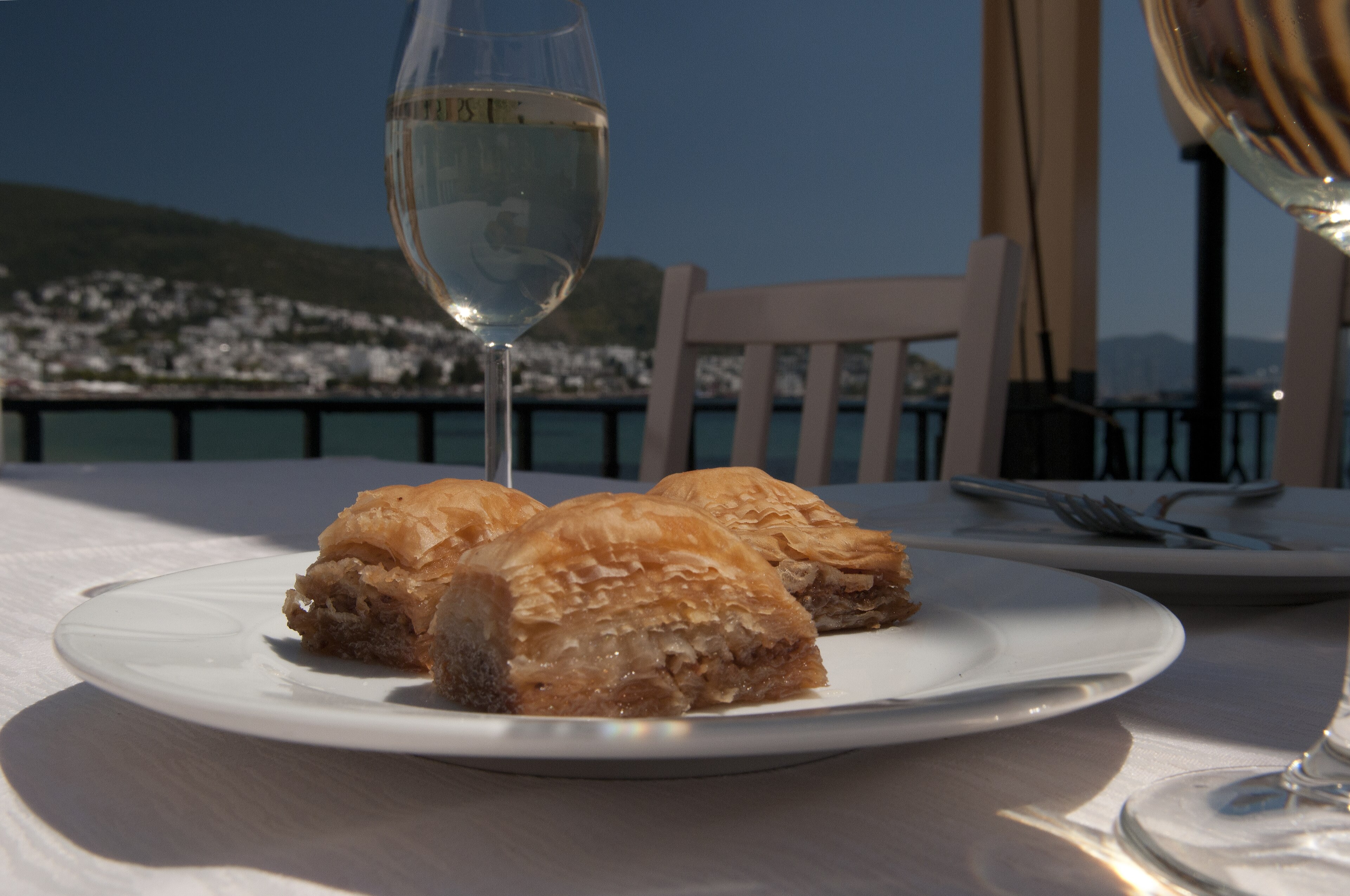
Along the coasts, the focus shifts to fresh seafood. The Aegean and Mediterranean shores around Bodrum and Antalya serve grilled fish, calamari and prawns straight from the day’s catch, often alongside meze and a glass of rakı, the anise spirit. The waterside fish restaurant, with the sea in view and a slow parade of small plates, is one of the great pleasures of a coastal trip.
The sweet table
Turkey has a serious sweet tooth. Baklava — layers of paper-thin pastry, nuts and syrup — is the celebrated favourite, and the city of Gaziantep in the south-east is considered its home. Lokum, better known as Turkish delight, comes in dozens of flavours; künefe is a warm cheese pastry soaked in syrup and served hot; and sütlaç is a comforting baked rice pudding. Every one of them pairs naturally with tea or coffee.
Tea, coffee and the culture of drinking
Çay, Turkish tea, is everywhere — the constant companion to conversation, business and rest, served strong and dark in little tulip-shaped glasses at all hours. Turning down a glass is nearly impossible, and accepting it is the easiest way into Turkish hospitality.
Turkish coffee is a different ritual, thick and unfiltered, served in tiny cups with the grounds settling at the bottom. It is prized enough to be recognised by UNESCO as part of the country’s intangible cultural heritage, and it is reserved for slower, more sociable moments than the everyday glass of tea.
Street food and regional variety
The streets serve some of the best cheap eats anywhere. Simit, the sesame-crusted bread ring, is sold from red carts on every corner; balık ekmek, a grilled fish sandwich, is a classic by the water in Istanbul; and in the cooler months vendors sell roasted chestnuts and sweetcorn from glowing braziers.
Regional variety runs deep. Gaziantep is renowned for its baklava and kebabs, while the Black Sea coast has its own traditions of anchovies (hamsi) and cornbread. Eating your way across the country is a journey in itself — start planning it through our destinations.