
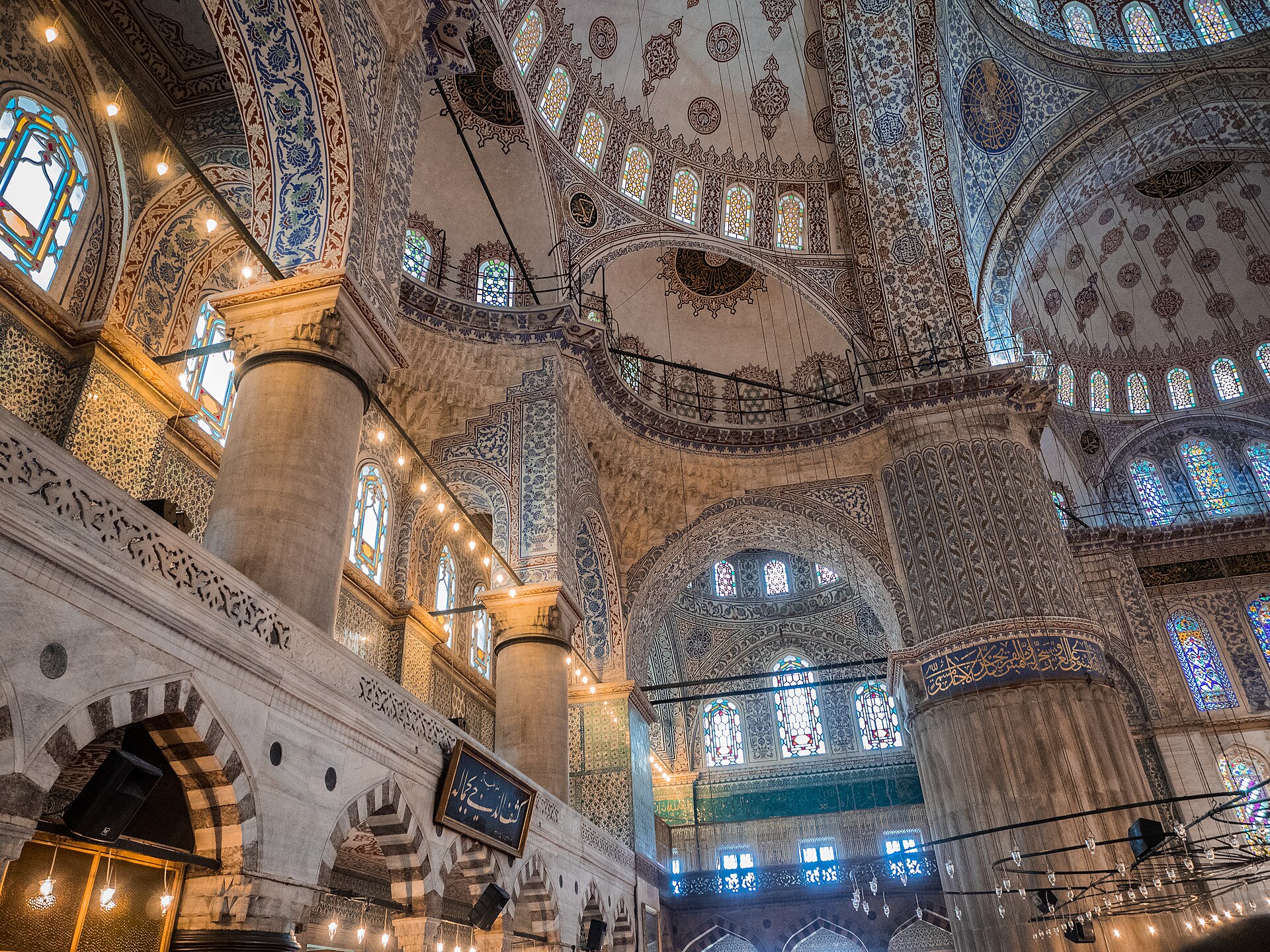
Religion runs quietly through daily life in Turkey, and understanding its place helps visitors read the country and behave respectfully. Turkey is a Muslim-majority nation with a secular state — a combination that produces a great deal of variety in how faith is actually lived.
A Muslim-majority country
The population is overwhelmingly Muslim, and most Turkish Muslims are Sunni. There is also a significant Alevi minority, a distinct tradition within Islam with its own practices and places of worship. Together these communities give the country a religious character that is broadly Islamic but far from uniform.
A secular state
Since the founding of the modern republic, Turkey has been constitutionally a secular state. Religion and government are formally separated, and public life is not run according to religious law. This is a defining feature of the country and sets it apart from many of its neighbours.
In practice, this means that how people observe their faith varies enormously. Some Turks are devout, praying five times a day and dressing conservatively; others are entirely relaxed, drinking alcohol and rarely visiting a mosque. Both are perfectly normal, and the balance shifts from person to person and place to place. Cosmopolitan districts of Istanbul can feel thoroughly liberal, while conservative towns in central Anatolia are more traditional.
Faith in the rhythm of the day
Even for the non-religious, Islam shapes the soundtrack of the country. Mosques are everywhere, and the call to prayer rings out five times a day, drifting across cities and villages alike. It is one of the sounds visitors most associate with Turkey, and the first dawn call can be a memorable, atmospheric moment.
Ramadan, the month of fasting from dawn to dusk, is widely observed. Many people fast, some restaurants adjust their hours, and the evening meal that breaks the fast becomes a warm social occasion. Travelling during Ramadan is entirely possible — tourist areas carry on largely as normal — but a little awareness goes a long way, such as not eating conspicuously in the street in more conservative areas during daylight.
A deep religious heritage
Turkey’s spiritual history reaches far beyond Islam. This land was central to early Christianity: the apostle Paul travelled through Anatolia, several of the earliest churches were founded here, and cities such as Ephesus feature in the New Testament. Istanbul, as Constantinople, was for a thousand years the capital of Eastern Christianity — the great church of Hagia Sophia, later a mosque and now a mosque again, is its most famous monument.
There is a long Jewish heritage too, with communities that have lived in Anatolia and the former Ottoman lands for centuries. Ancient synagogues, churches and monasteries survive across the country, and the Cappadocia region in particular is dotted with rock-cut churches. This layering of faiths is one of the things that makes travelling here so rich.
Visiting a mosque respectfully
Turkey’s mosques are among its most beautiful buildings, and most welcome respectful visitors. A few simple courtesies apply:
- Dress modestly. Cover your shoulders and knees. Women should cover their hair with a scarf; many large mosques lend them at the entrance.
- Remove your shoes before stepping onto the carpet. Shoe racks or bags are usually provided.
- Avoid prayer times. Try not to visit during the five daily prayers, and especially not the busy midday prayer on Fridays. Wait for worshippers to finish rather than walking through them.
- Be quiet and unobtrusive. Keep your voice low, do not photograph people praying, and switch phones to silent.
Follow these and you will be welcomed. A mosque visit, done thoughtfully, is one of the most rewarding cultural experiences in the country. To plan where to go, browse our destinations.