
The Turks were not native to Anatolia. Their arrival, from the 11th century onwards, transformed the peninsula — its language, its faith and its rulers — and began the long process by which Byzantine Asia Minor became Turkey. The people who led that change were the Seljuks.
West from Central Asia
The Turkic peoples originated far to the east, on the steppes of Central Asia, where they lived as herders and horsemen. Over generations they migrated west, converting to Islam along the way, and by the 11th century one branch — the Seljuks — had built a powerful state across Persia and the Near East. Anatolia, held by the weakening Byzantine Empire, lay just beyond its frontier.
The Battle of Manzikert
The turning point came in 1071 at the Battle of Manzikert, near Lake Van in the east. There the Seljuk sultan defeated a large Byzantine army and captured its emperor. The victory did more than win a battle: it shattered Byzantine defences across the east and opened the interior of Anatolia to Turkish settlement. Over the following decades, Turkic groups moved in and made the peninsula their home. It is one of the most consequential dates in Turkish history.
The Sultanate of Rum
Out of this settlement grew the Sultanate of Rum, ruled from Konya in the central plateau. The name — from “Rome” — reflected the land they had taken from the Eastern Roman Empire. Under the Sultanate, Anatolia became a meeting point of cultures, where Turkish, Persian, Greek and Armenian traditions mixed. Persian was the language of the court and its poetry, and the arts flourished under royal patronage. Konya in particular grew into a centre of learning that drew scholars, craftsmen and mystics from across the Islamic world, many of them refugees from the Mongol advance further east.
Rumi and the whirling dervishes
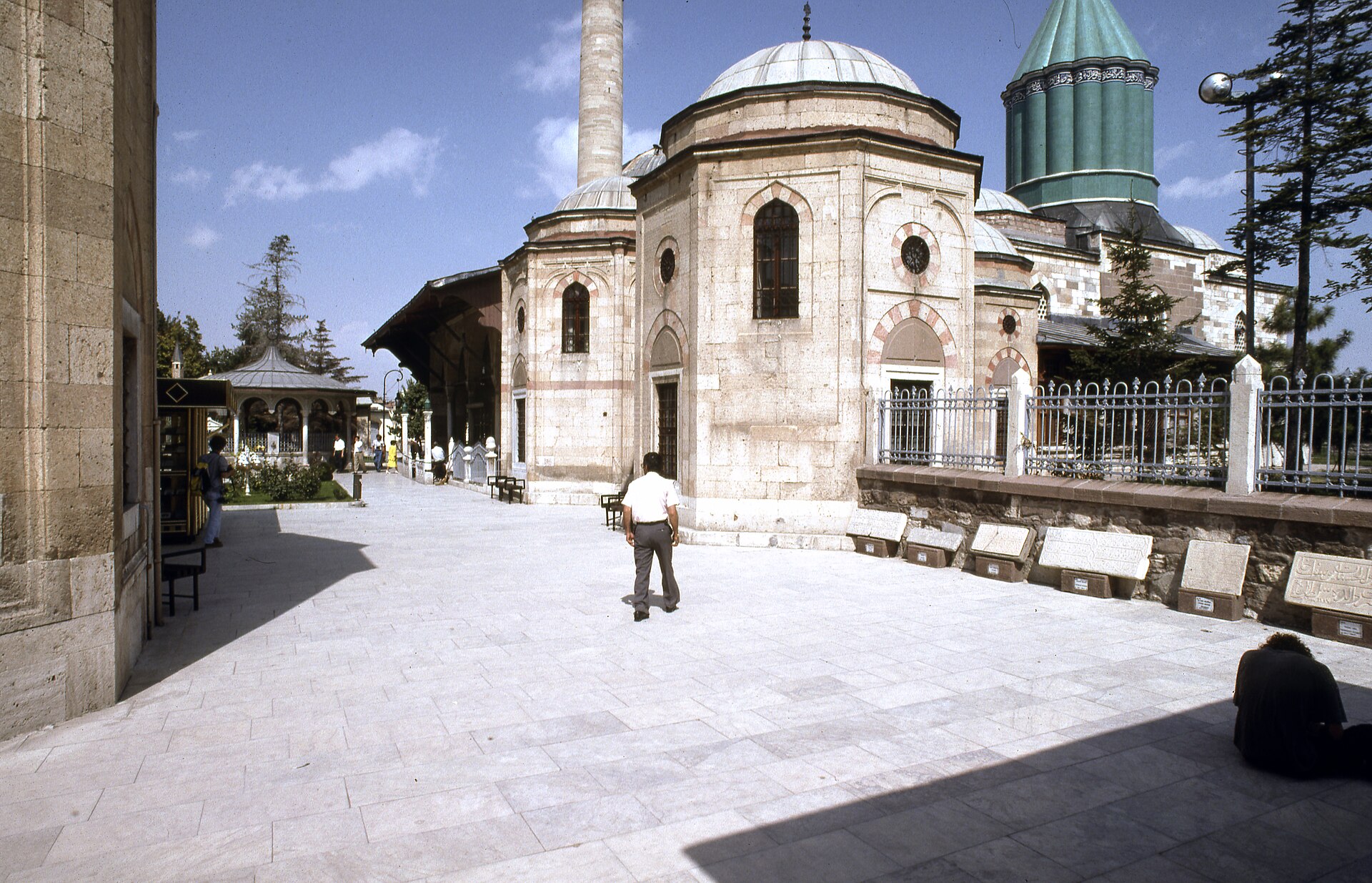
It was in Seljuk Konya, in the 13th century, that the poet and mystic Rumi lived and taught. His verse, written in Persian, remains among the most widely read poetry in the world, prized for its warmth and its themes of love and longing for the divine. After his death his followers founded the Mevlevi order, known in the West as the whirling dervishes. Their slow, turning dance — the sema — is not performance but a form of meditation and prayer, and it remains one of the most recognisable images of Turkish spiritual life.
Seljuk architecture
The Seljuks were great builders, and their style is distinct: sober stone buildings with astonishingly intricate carved portals. Along the trade routes that crossed Anatolia they raised caravanserais — the fortified roadside inns known as han — where merchants and their animals could rest safely for a night, free of charge for the first few days. These sturdy stone halls, spaced roughly a day’s travel apart, kept commerce moving across the plateau. In the cities they built richly decorated medreses, the colleges of Islamic learning, several of which still stand at Konya, Sivas and Erzurum.
Fragmentation and the rise of the Ottomans
Seljuk power did not last. In the 13th century the Mongols swept west and broke the Sultanate’s authority, and Anatolia fragmented into a scatter of small rival principalities known as beyliks. Each held a corner of the peninsula and jostled with its neighbours. It was from one of these — a modest frontier beylik in the north-west, led by a chief named Osman — that the next great power would grow: the Ottomans.
The Seljuk centuries left a lasting foundation. They brought the Turkish language and Islam to Anatolia, built roads and monuments that survive, and produced a spiritual culture that still defines the country. To see how their story continued, read on to the Ottoman Empire, or explore Turkey’s regions through our destinations guide.