
Anatolia — the great peninsula that makes up Asian Turkey — is one of the longest continuously inhabited regions anywhere on earth. Long before Greeks or Romans reached its coasts, people here were building temples, farming towns and empires whose ruins still shape the landscape. This is where several of humanity’s first experiments in settled life took place.
Before the cities: Göbekli Tepe and Çatalhöyük
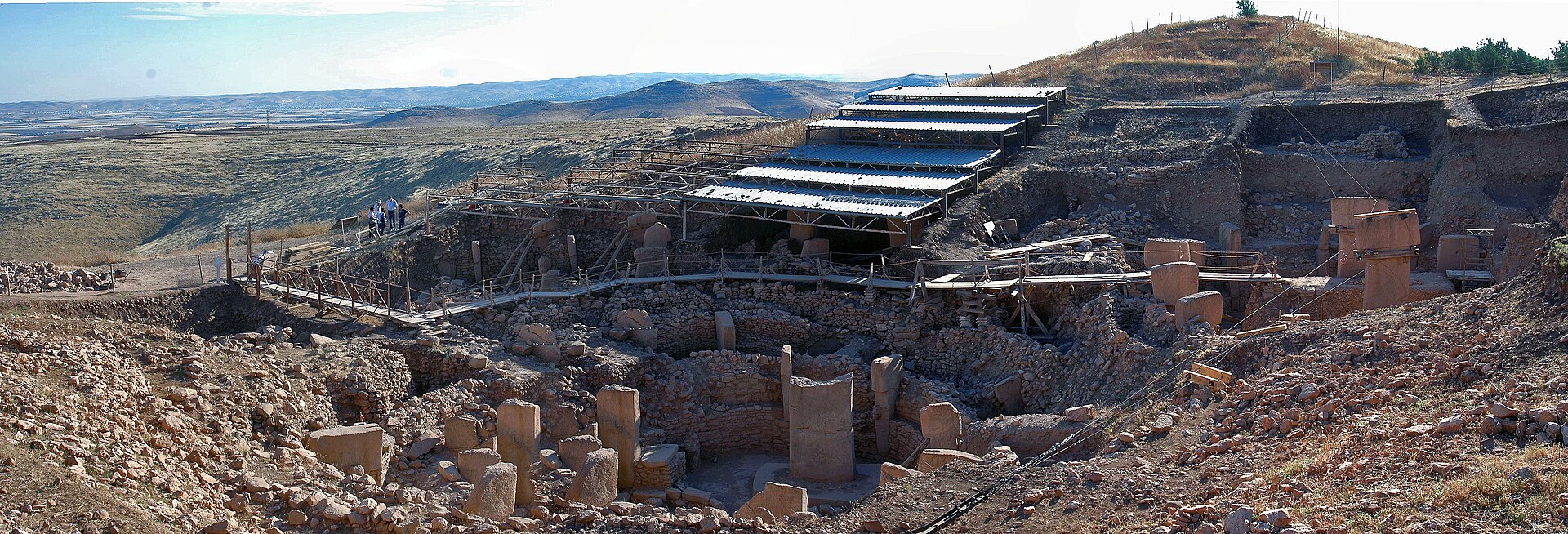
The story begins earlier than most people expect. On a hilltop near Şanlıurfa in the south-east lies Göbekli Tepe, the oldest known monumental temple in the world — roughly 11,000 years old. Its carved stone pillars, arranged in circles, were raised by hunter-gatherers who had not yet taken up farming or made pottery. That order surprised archaeologists, since it suggests communal ritual may have helped draw people together rather than the other way around.
A few thousand years later came Çatalhöyük, a vast Neolithic settlement on the Konya plain where thousands of people lived packed together in mud-brick houses entered through the roof. There were no streets; residents moved across the rooftops and climbed down ladders into their homes. With its wall paintings, plastered ox skulls and dense honeycomb of rooms, it is one of the most important windows we have onto how the first farming communities lived, worshipped and buried their dead.
The Hittites and Hattuşa
By the Bronze Age, central Anatolia was home to the Hittites, one of the great powers of the ancient Near East. From their capital at Hattuşa, ringed by massive walls and guarded by carved lions, they built an empire that rivalled Egypt. The two clashed at the Battle of Kadesh against Ramesses II, a confrontation later settled by one of the earliest recorded peace treaties. The Hittites left a rich archive of clay tablets, giving us an unusually clear view of their law, religion and diplomacy.
Troy on the Aegean
Further west, on the coast near Çanakkale, stood Troy — the city of Homer’s Iliad. For a long time it was treated as pure legend, until the 19th-century excavations of Heinrich Schliemann uncovered a mound with many layers of settlement stacked on top of one another. Whether or not the Trojan War happened as Homer told it, a real fortified city guarded this strategic corner where the Aegean meets the Dardanelles, and its ruins are still open to visitors today.
Phrygians, Lydians and Urartu
As the Bronze Age gave way to the Iron Age, new peoples rose across the peninsula. The Phrygians ruled from Gordion in the centre, and their memory survives in the figure of King Midas and the tale of the Gordian Knot, later cut by Alexander the Great. To their west, the Lydians grew rich from the gold of their rivers. Their capital was Sardis, and their King Croesus became a byword for wealth. The Lydians are also credited with a quietly world-changing invention: the first true coinage, struck in electrum, which transformed how people traded. In the mountainous east, the kingdom of Urartu left behind imposing fortresses and skilled metalwork around Lake Van.
Walking the ancient landscape today
What makes Anatolia unusual is how much of this deep past is still visible above ground. You can stand among the walls of Hattuşa, climb the mound at Troy, or trace the streets of far older settlements. Much of this early history sits inland and in the east, but it connects directly to the classical cities of the coast that came later — the Greek and Roman world that grew up around places like Ephesus. For most visitors, Anatolia’s ancient layers are the foundation beneath everything else Turkey has to show, and a reminder that the country’s story stretches back to the very beginnings of civilisation.
Explore the wider country through our destinations overview to see how these ancient sites fit alongside the coast, Cappadocia and Istanbul.