Istanbul is the rare city that sits on two continents at once, split down the middle by the Bosphorus strait — Europe on one bank, Asia on the other, ferries crossing between them all day. It was Byzantium, then Constantinople, then the Ottoman capital, and roughly sixteen million people live here now. That long layering is the whole appeal: a Roman-era cistern under a mosque, a bazaar older than most European countries, and the call to prayer bouncing off buildings that have been churches, mosques and museums in turn.
Most first-time visitors base themselves in Sultanahmet, the old city on the European side, where the headline sights sit within walking distance of one another. The modern half of the city — Beyoğlu, Galata and Taksim — is a tram ride north across the Golden Horn, and it’s where Istanbul does its eating, drinking and late nights. You don’t have to choose between them, but it helps to know which one you’re sleeping in.
The old city: Sultanahmet
The core sights cluster tightly here, which is both the good news and the catch — the crowds concentrate in the same few hundred metres.
Hagia Sophia is the one that stops people in the doorway. Built as a Byzantine church in the sixth century, converted to a mosque after the Ottoman conquest, run as a museum through the twentieth century and now a working mosque again, it carries all of those histories at once under one vast dome. Because it functions as a mosque, entry is free but it closes to visitors during prayer times, and you’ll need to dress accordingly.
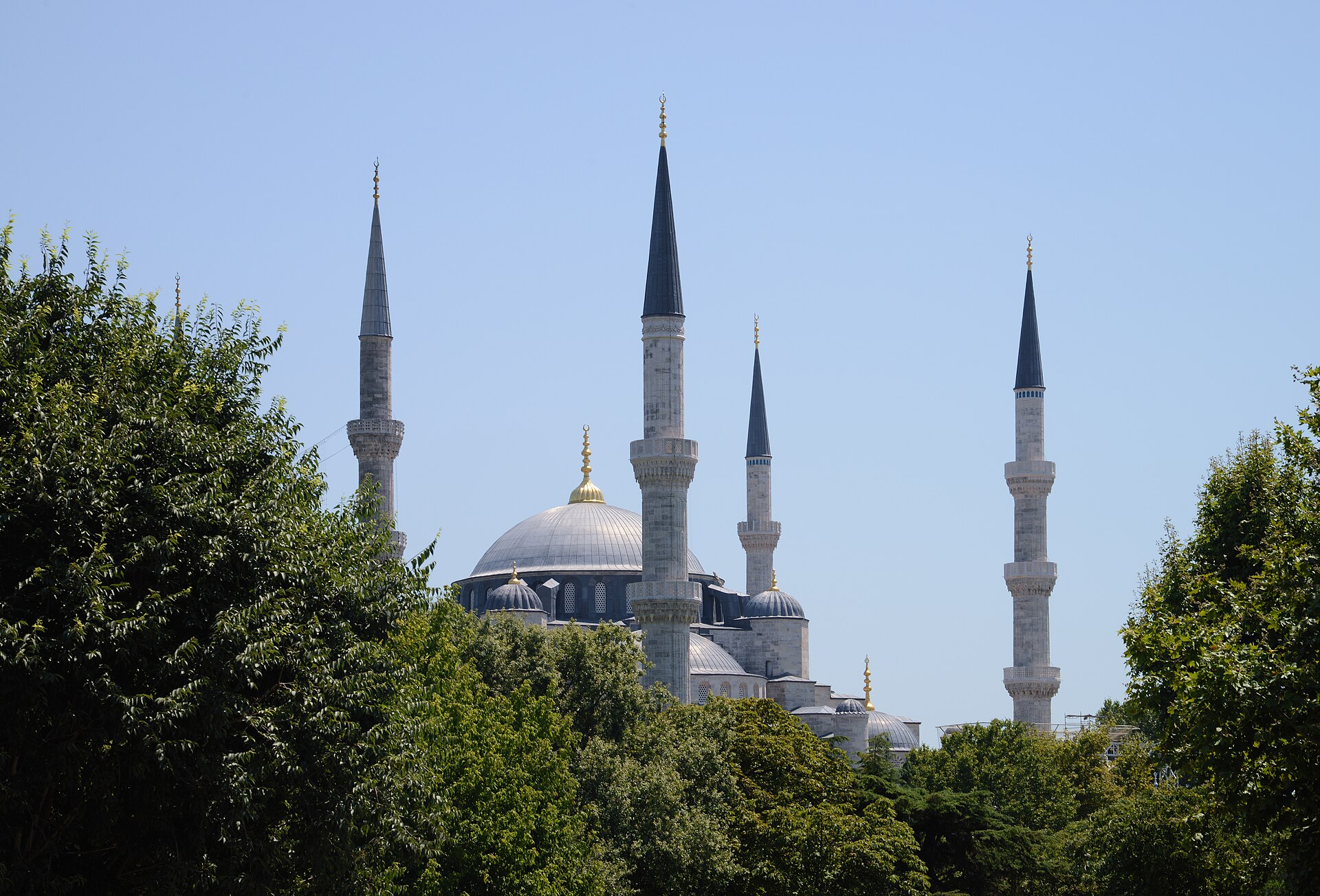
A short walk across the park, the Blue Mosque (properly the Sultan Ahmed Mosque) answers it with six minarets and a cascade of domes lined in the blue İznik tiles that give it the nickname. Topkapı Palace was home to the Ottoman sultans for centuries; give it a couple of hours and pay the extra for the Harem, which is the part most people remember. Nearby, the Basilica Cistern is an underground Byzantine reservoir — a forest of columns in dim, dripping light — and a cool escape when the summer heat gets heavy.
Two practical notes for this district. The queues at Hagia Sophia and Topkapı are real in high season, and a skip-the-line or guided ticket genuinely saves you an hour or more. And these are active places of worship: cover your shoulders and knees, women should bring a scarf for their hair, and shoes come off at the mosque door.
The bazaars and Süleymaniye
Uphill from the tram, the Grand Bazaar is a covered labyrinth of around four thousand shops selling carpets, lamps, gold and a great deal aimed squarely at tourists. Treat it as an experience rather than a shopping list, haggle without heat, and don’t feel you have to buy. Down by the water, the smaller Spice Bazaar (the Egyptian Bazaar) is more manageable and better for edible souvenirs — Turkish delight, saffron, dried fruit and tea.
While you’re up here, the Süleymaniye Mosque is the one many locals rate above the Blue Mosque: less crowded, beautifully proportioned, and with a terrace that looks out over the Golden Horn. It’s an easy addition to a bazaar morning.
Out on the Bosphorus
If you do one thing beyond the monuments, make it a Bosphorus cruise. Seeing the city from the water is the way it was meant to be read — wooden mansions and Ottoman palaces along both shores, the great suspension bridges overhead, and the line between Europe and Asia reduced to a stretch of busy blue. Options run from cheap public ferries to longer guided boats; even the commuter ferry to the Asian side does the job for the price of a tram fare.
Those same ferries are the best way to reach the Asian side, which most tourists skip and shouldn’t. Kadıköy is where Istanbul eats and drinks like a local, with a produce market and a wall of small restaurants, while Üsküdar is quieter and more traditional. In summer, the ferries out to the car-free Princes’ Islands make an easy day away from the traffic.
Grand imperial fatigue is a real thing, but two more palaces earn their place: Dolmabahçe, the ornate nineteenth-century waterfront palace where the Ottomans went full European, and, further out, the mosaics and frescoes of Chora (Kariye), some of the finest Byzantine art anywhere. Save these for a second or third day.
Where to eat and stay
Neighbourhood shapes your trip more than any single sight. Sultanahmet puts you inside walking distance of the monuments but empties out at night. Karaköy and Galata, across the Golden Horn, trade proximity for atmosphere — this is the food-and-nightlife end, with the Galata Tower for the view. And Kadıköy on the Asian side is where you go to feel like you live here rather than visit. Our where to stay in Istanbul breakdown sorts them by what you actually want from your days.
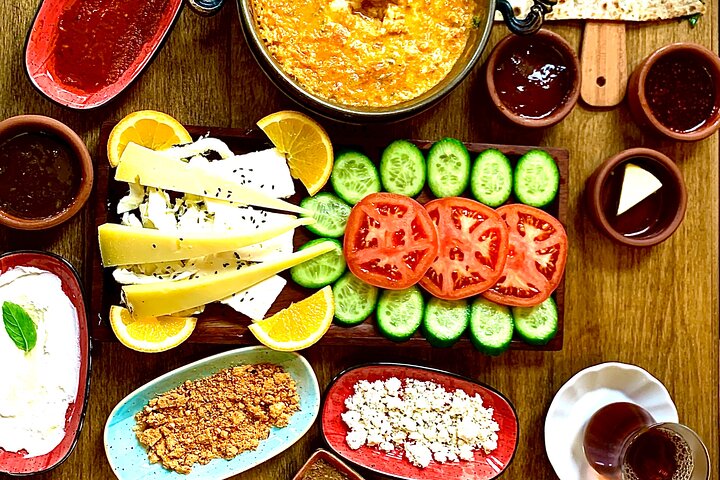
Eat widely and cheaply. A proper Turkish breakfast is a spread, not a plate; lunch is grilled fish by the Galata Bridge or a lahmacun from a bakery; and you’ll never be far from a glass of tea offered whether you’re buying or not.
When to go, and getting there
Spring (April to May) and autumn (September to October) are the sweet spots — warm, clear and comfortable for the long days on your feet the sightseeing demands. Summer is hot and busy, and trudging between marble-floored mosques in July is harder work than it sounds; winter is mild but grey and wet.
Two airports serve the city. Istanbul Airport (IST) on the European side is the main international hub; Sabiha Gökçen (SAW) sits on the Asian side and often carries the cheaper flights, but it’s a longer transfer into town. Once you’re here, buy an İstanbulkart at any station — it works on the trams, metro and, crucially, the ferries, and it’s far cheaper than paying per ride.
Ready to plan? Browse Istanbul tours, sort out where to stay by neighbourhood, or read our guide to the best things to do in Istanbul.