
For more than six centuries, the Ottomans ruled one of history’s great empires, governing lands across the Middle East, North Africa and south-eastern Europe from their capital on the Bosphorus. Their rise from a single frontier principality to a world power, and their long slow decline, is the backbone of Turkey’s late history.
From beylik to conquest
The Ottomans began small. In the late 13th century, as the Seljuk order fell apart under Mongol pressure, a chief named Osman led a modest frontier beylik in north-western Anatolia. His successors expanded steadily, crossing into Europe and absorbing rival territories on both sides of the straits. By the 15th century the shrunken Byzantine Empire was almost surrounded.
The decisive moment came in 1453, when the young sultan Mehmed II besieged and took Constantinople. The conquest ended the Byzantine Empire and gave the Ottomans a capital worthy of an empire. Mehmed set about rebuilding the city, repopulating it and turning Hagia Sophia into a mosque; the Byzantine capital became the Ottoman one, and remained so until the empire’s end.
The golden age of Süleyman
The empire reached its height in the 16th century under Süleyman the Magnificent, whose long reign is remembered as its golden age. His armies pushed deep into Europe and the Middle East, and at its greatest extent the empire spanned three continents, controlling the eastern Mediterranean and the pilgrimage routes of the Islamic world. At home, Süleyman reformed the legal code so thoroughly that his own subjects called him the Lawgiver.
This was also a great age of building.
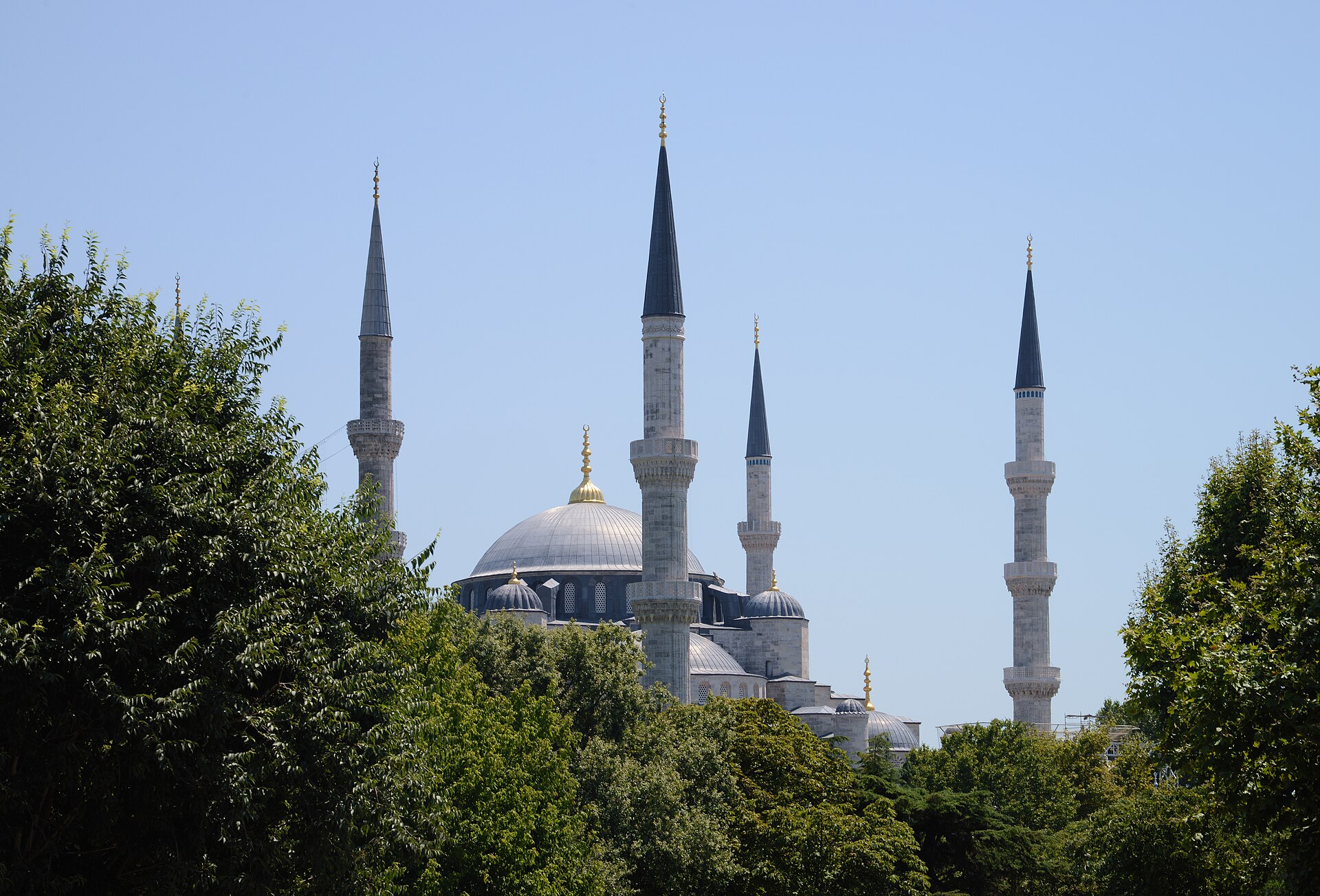
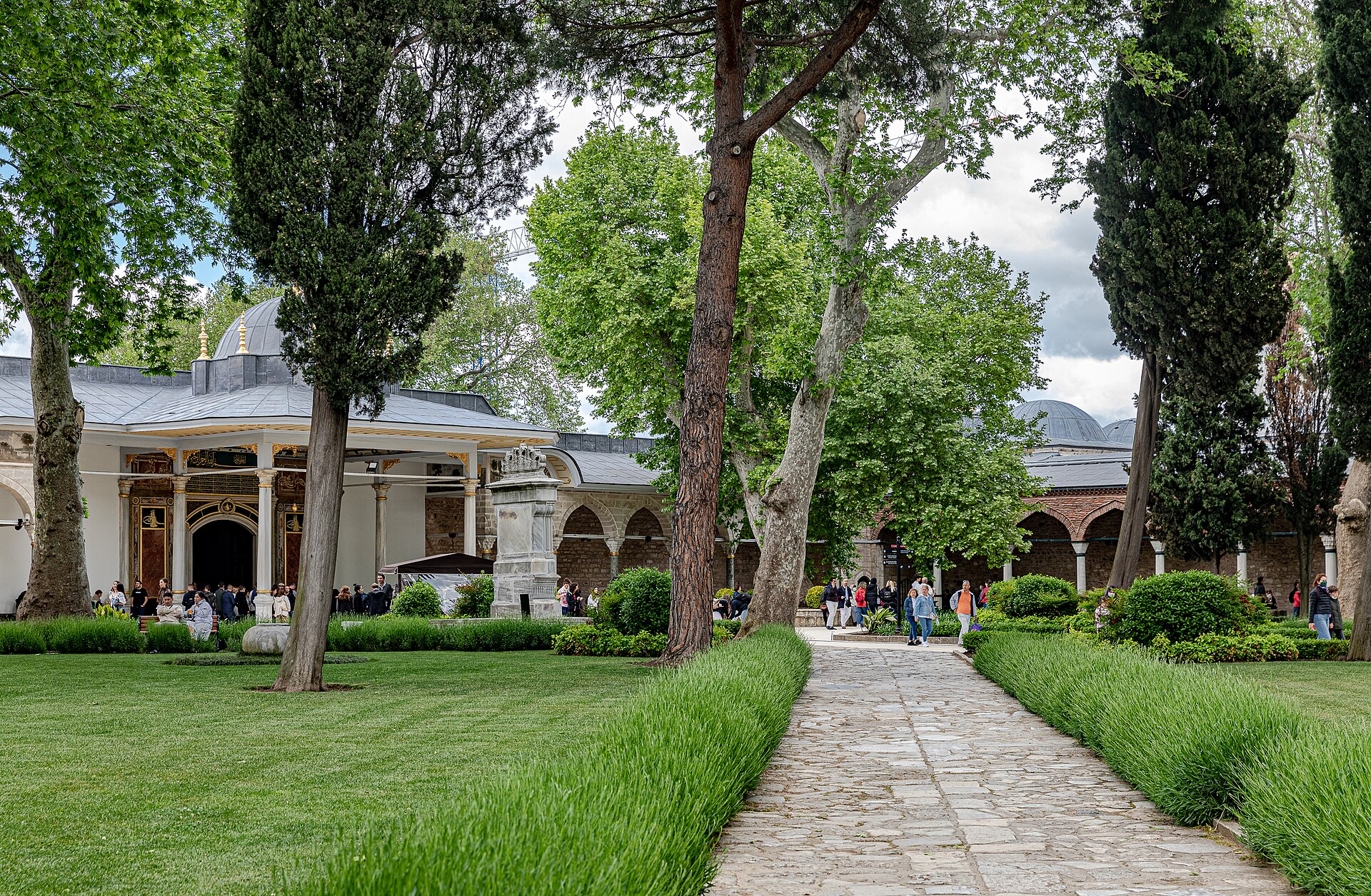
In Istanbul, the master architect Sinan raised the mighty Süleymaniye Mosque on one of the city’s hills, a masterpiece of dome and light that answered Hagia Sophia. Later came the Blue Mosque, with its cascade of domes and six slender minarets. Above the old city spread Topkapı Palace, the sprawling residence of the sultans, with its courtyards, treasury and the secluded world of the harem — the private imperial household, screened from public life and ruled by the women of the dynasty.
Society and reach
At its best the Ottoman world was strikingly diverse. Muslims, Christians and Jews lived under a system, known as the millet, that granted religious communities a measure of self-rule over their own affairs. When Spain expelled its Jews in 1492, many were welcomed into Ottoman lands, where their descendants lived for centuries. The empire drew talent and trade from across three continents; its cities were cosmopolitan, its cuisine and craft refined, and its influence in art and architecture reached far beyond its borders. Much of the old Ottoman heart of Istanbul — the bazaars, the mosques, the timber mansions along the Bosphorus — still gives the city its character.
The long decline
No empire holds its peak forever. From the 17th century the Ottomans slipped into a long, uneven decline. Rival European powers grew stronger and richer; the empire lost wars and territory, and struggled to reform fast enough to keep pace. By the 19th century it was widely nicknamed “the sick man of Europe”, its provinces breaking away one by one as nationalism spread through the Balkans and beyond.
The end came with the First World War. The empire entered the conflict on the side of Germany and Austria-Hungary, and its defeat in 1918 left its heartland occupied and its future in doubt. Out of that crisis came a national resistance movement that would fight a war of independence and, in its wake, sweep away the sultanate altogether.
The Ottoman centuries left Turkey an extraordinary inheritance — the mosques and palaces of Istanbul, a cuisine and culture that still define the country, and a place at the crossroads of Europe and Asia. What followed the empire’s fall was something new: a modern republic. Read on in Modern Turkey, or explore the country through our destinations guide.