
Turkey is home to around 85 million people, and getting to know them is one of the real pleasures of travelling here. The country’s warmth towards visitors is not a cliché invented for tourists — it runs deep in the culture, and most people leave with a story about a stranger’s kindness.
A country of many roots
The majority of Turkey’s population are ethnic Turks, whose ancestors migrated westward into Anatolia over the centuries and mixed with the many peoples already living there. The largest minority are the Kurds, concentrated mainly in the south-east of the country, with their own language and traditions. Alongside them live smaller communities of Arabs, Laz along the eastern Black Sea coast, Circassians and others.
This mix reflects Turkey’s geography. Sitting where Europe, the Caucasus and the Middle East meet, the land has absorbed people from every direction for thousands of years. The result is a population that is broadly unified by a shared national identity while remaining regionally distinct.
A young population
By European standards Turkey has a relatively young population, with a large share of people under the age of forty. That youthfulness shows in the energy of the cities, the crowded universities and the fast-moving popular culture — Turkish television dramas, for instance, are watched across the Middle East, the Balkans and beyond.
Tea, the social glue
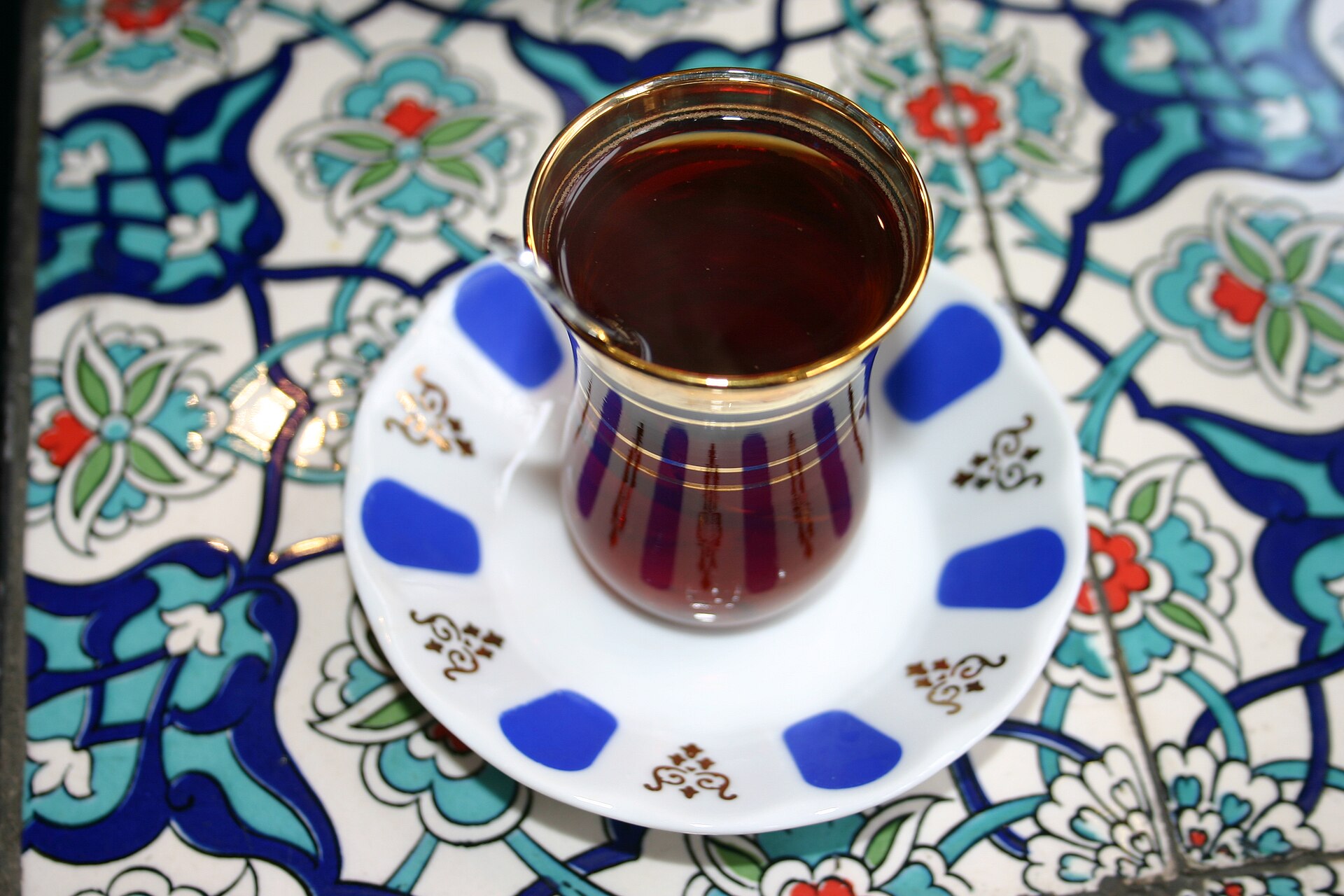
If one thing binds daily life together, it is tea. Çay, served strong and dark in small tulip-shaped glasses, is offered everywhere: in shops, offices, homes and on the street. Turning it down is almost impossible, and accepting it is the surest way into a conversation. A shopkeeper who brings you tea is not necessarily trying to sell you something — sharing çay is simply what people do. Coffee has its own honoured place, but tea is the everyday ritual.
Family and community
Family ties remain strong across Turkey. Extended families often stay closely involved in one another’s lives, generations may share a home or a neighbourhood, and social occasions tend to be large and generous. Hospitality towards guests is treated as an obligation and an honour — the tradition of welcoming a visitor with food and drink is taken seriously, especially in rural areas.
Public life spills onto the street. Cafés, tea gardens and pavements fill with people talking, playing backgammon and watching the world go by. In the evenings the promenades of coastal towns and city parks come alive with families out walking. This lively café and street culture is one of the things visitors notice first and remember longest.
City and country
Turkey has urbanised rapidly over the past few decades. Millions have moved from the countryside to the cities, and today the great majority of the population lives in urban areas. Istanbul is a vast metropolis of well over fifteen million; Ankara, the capital, and Izmir on the Aegean coast are also major cities with their own distinct character.
Yet traditional rural life continues across Anatolia. In the villages, farming, herding and long-standing customs carry on, and the pace is slower. Travelling from the cosmopolitan districts of Istanbul to the quiet valleys of Cappadocia can feel like moving between two very different countries, and both are equally Turkish.
A wide diaspora
Turkey’s story reaches well beyond its borders. A large Turkish diaspora lives in Europe — Germany above all, where communities settled from the 1960s onwards — as well as in the Netherlands, France and further afield. Many keep close ties to home, returning each summer and sending the influences of both worlds back and forth.
Wherever you travel in Turkey, the people are likely to be the part of the trip you remember most. To decide where to meet them, explore our destinations.