
Antalya is the front door to the Turkish Riviera — the long Mediterranean shore that Turkey markets as the Turquoise Coast, where the mountains of the Taurus run almost to the water and the sea holds its colour well into autumn. It is a real working city of around a million and a half people, not a resort strip, and that is its advantage: you get an Ottoman old town, one of the country’s best museums and two city beaches, all with the ancient cities of Pamphylia an easy drive away.
Most visitors arrive through Antalya Airport (AYT), one of the busiest in Turkey and a magnet for direct charter flights from across Europe through the warm months. Many of those passengers never see the city at all — they transfer straight to an all-inclusive resort in Belek, Kemer, Side or Alanya and day-trip from there. Basing yourself in Antalya itself is the other way to do it, and for a first trip focused on sightseeing rather than a sun lounger, it’s the one we’d point you towards.
Kaleiçi: the old town
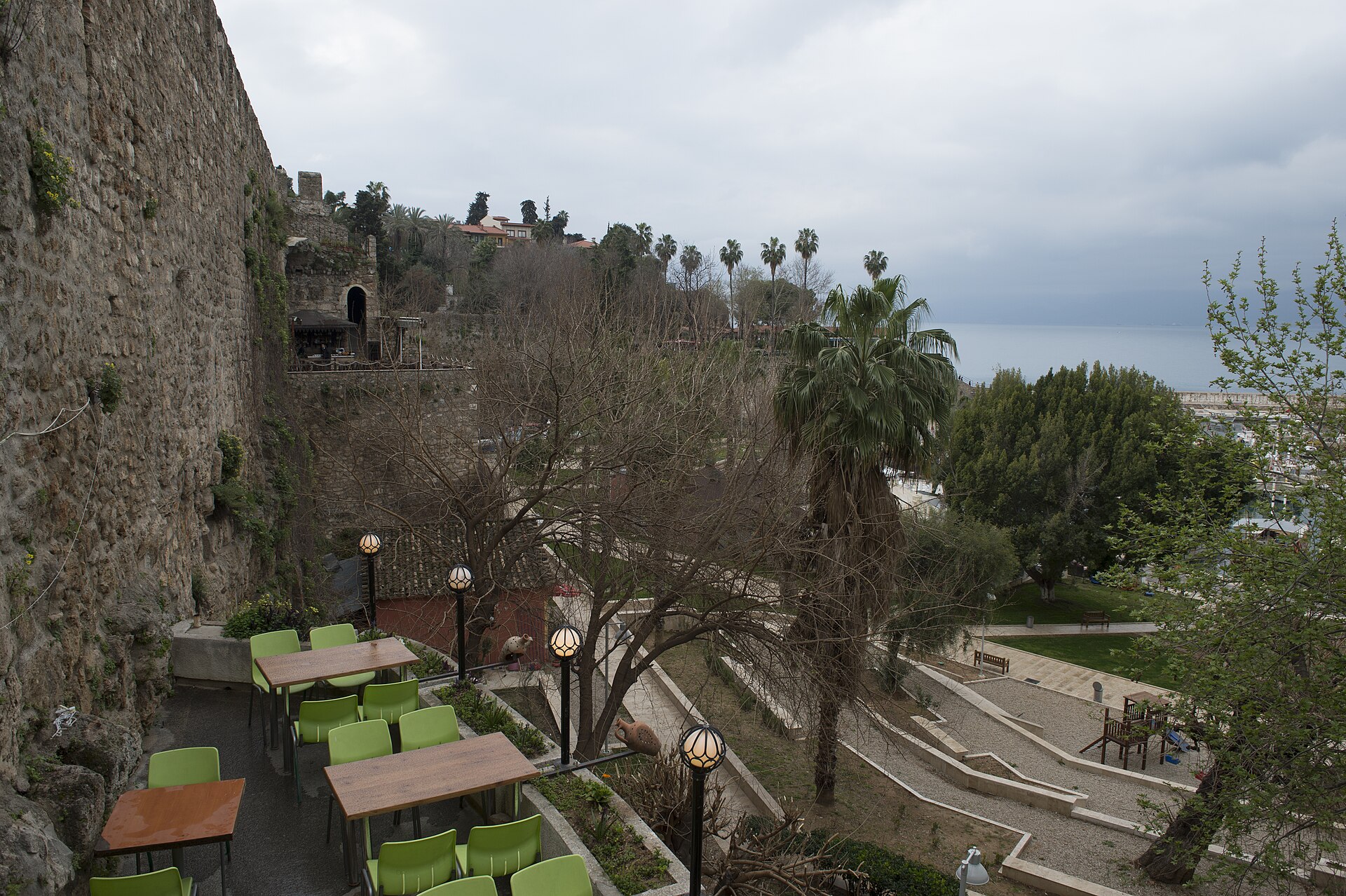
The heart of Antalya is Kaleiçi, the walled old quarter that spills down the cliff to the harbour. It’s a tangle of narrow lanes and restored Ottoman-era houses, many now boutique hotels, cafés and carpet shops, threaded between fragments of Roman and Seljuk wall. The set-piece is Hadrian’s Gate, a three-arched marble gateway raised for the Roman emperor’s visit and still the grandest way to walk into the old town.
Wander down to the old harbour, a small horseshoe marina below the cliffs where wooden gulets tie up and boat trips leave along the coast. Above it, Hıdırlık Tower and the clifftop tea gardens give you the view out over the bay to the mountains — a good spot to end an afternoon. Kaleiçi is compact enough to see on foot in a morning, and pleasant enough to keep drifting back to for dinner.
A word of honesty: the old town leans hard into tourism, and in high season the central lanes get busy and the touts persistent. Go early or late, stay off the one obvious main drag, and it settles into something much more likeable.
The Antalya Museum
The Antalya Museum is one of the finest archaeological collections in Turkey, and it earns a couple of hours. The galleries gather the best finds from the surrounding ancient cities — above all a hall of Roman statuary lifted from Perge, gods and emperors in remarkable condition, alongside sarcophagi, mosaics and rooms that run from the prehistoric up to the Ottoman. If you plan to visit the ruins at Perge or Side, the museum is the piece that ties them together, and it’s worth seeing first.
City beaches and the Düden Falls
Antalya has two very different beaches at the city edge. Konyaaltı, to the west under the mountains, is a long pebble beach with the cleanest backdrop — the Beydağları range rising straight out of the sea behind it. Lara, to the east, is the sandy one, and the strip behind it is lined with large resort hotels. Both have the blue Mediterranean water the coast is known for; just set your expectations for pebbles at Konyaaltı if soft sand matters to you.
The other natural draw is the Düden Waterfalls. The upper falls sit in a shaded park north of the centre, where the river drops into a gorge you can walk behind. The lower falls are the more dramatic of the two: the same water tumbling straight off a cliff into the sea on the eastern edge of the city, best seen from a boat trip out of the old harbour.
The great ancient sites nearby
This stretch of coast was ancient Pamphylia, and its ruins are the real reason to give Antalya a few days. They make excellent half- and full-day trips, and you’ll find guided options on our Antalya tours page.
- Aspendos has the best-preserved Roman theatre in the Mediterranean world — a vast, near-complete auditorium that still seats thousands and still hosts performances. It’s the single most impressive site in the region.
- Perge is a sprawling classical city east of Antalya: a colonnaded main street, a stadium, baths and a monumental gateway. Its finest statues are the ones you’ll have seen in the Antalya Museum.
- Side combines ruins with a beach. A Roman temple to Apollo stands right on the point, columns against the sea, inside a resort town built among the old streets — touristy, but the setting is hard to beat.
- Termessos is the wild card: a mountain city the young Alexander chose not to besiege, its tombs and theatre scattered across a high, pine-covered ridge inland. It takes a walk uphill and rewards it with the most atmospheric ruins of the lot.
For something more active, the Köprülü Canyon inland is the region’s white-water rafting run — an easy, splashy day on cool mountain water that suits families and first-timers.
Where to base yourself
The core decision is city or resort. Stay in Antalya — ideally in a small hotel in Kaleiçi — and you’re within walking distance of the old town, the museum and the beaches, with every day trip on your doorstep. Stay at a resort in Belek (the golf-and-luxury enclave), Kemer (mountains meeting sea to the west) or Side and Alanya (further east) and you trade sightseeing convenience for a pool, a private beach and an all-inclusive band. Neither is wrong; they’re different holidays. Our where to stay in Antalya guide breaks the areas down by what you actually want from your days.
When to go, and getting there
May to June and September to October are the best windows: the sea is warm, the ruins are walkable without a hat welded to your head, and the crowds thin from their peak. July and August deliver reliable heat and full beaches in equal measure — fine for a pool holiday, hard work for a day tramping around Aspendos. Spring and autumn are the sightseer’s seasons here.
Getting in is straightforward: fly into AYT, a short transfer from the city and the resort belt alike. From the airport, the city tram and taxis reach the centre, while resorts run their own transfers. Once you’re based in Antalya, guided day tours are the simplest way to reach the scattered ancient sites without renting a car.
Ready to plan? Browse Antalya tours, sort out where to stay by area, or read our full Antalya travel guide.


