
Ephesus is one of the best-preserved ancient cities in the Mediterranean, and a visit is refreshingly simple to organise — but a few decisions made in advance turn a hot, crowded shuffle into one of the best half-days on Turkey’s Aegean coast. Here is how to visit well: what to see, what to pay extra for, whether to take a guide, how to get there and when to go.
The highlights worth your time
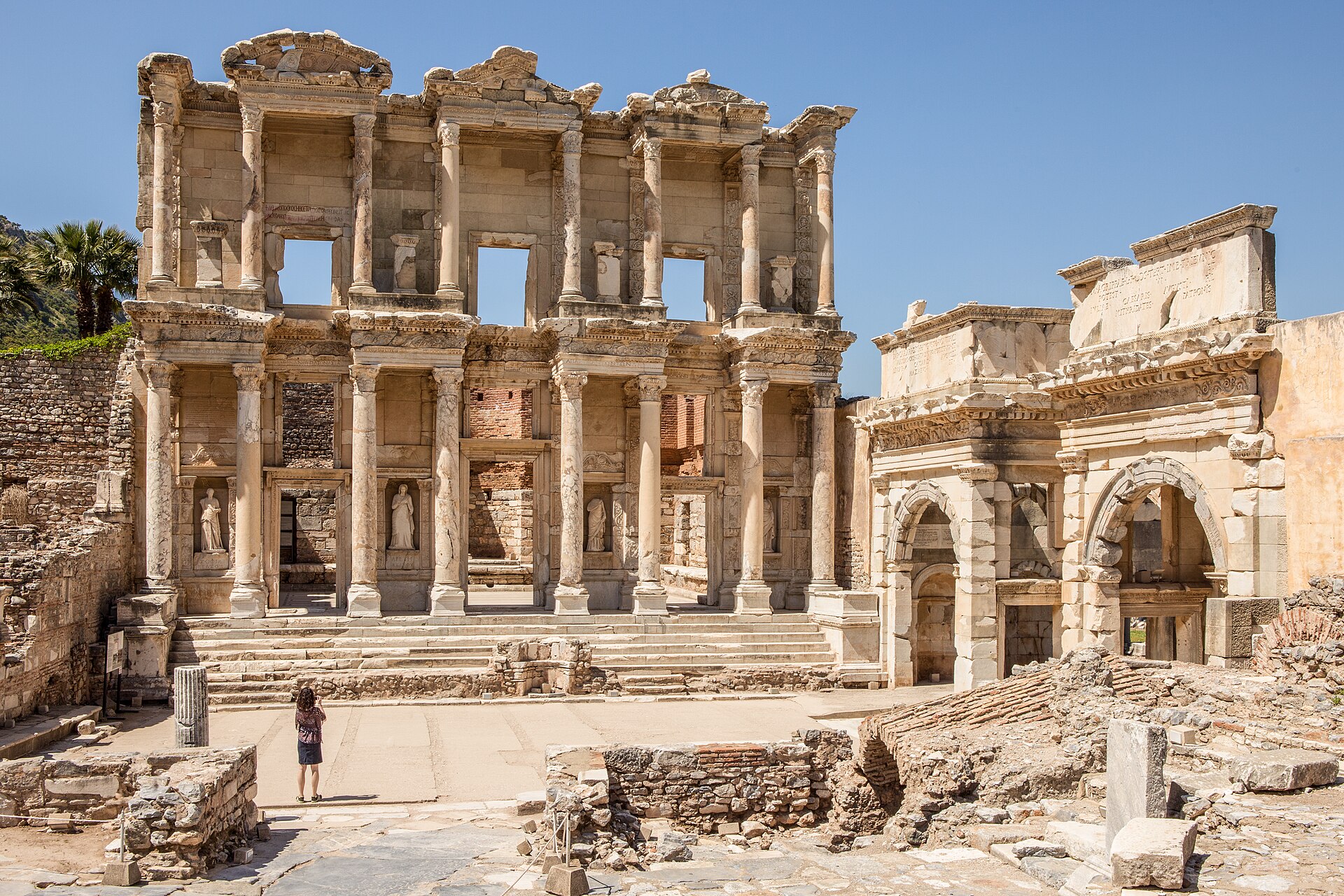
The site has two entrances — an upper gate and a lower gate — and most visitors walk it downhill from the top. That saves you the climb and delivers you to the famous Library at the dramatic low end rather than starting there. It is the route most tours take, and it works.
Coming down the hill you pass the Odeon, a small theatre used for council meetings, then the open expanse of the civic centre before the marble of Curetes Street funnels you downhill. Along it sit the elegant little Temple of Hadrian, a row of old shopfronts, and the grand public latrines that always draw a crowd. The street ends at the Library of Celsus, its two-storey facade reconstructed and glowing — the photograph everyone comes for, and the busiest spot on the site. From there a short walk brings you to the Great Theatre, a hillside amphitheatre that once seated around 25,000 and still shows the sheer scale of the ancient city.
Give yourself two to three hours minimum. Ephesus is bigger than a quick loop suggests, and rushing it is a waste of the journey.
Tickets and the extras worth paying for
You pay to enter the main site, and then there is one add-on that matters: the Terrace Houses. These sit behind a separate ticket, bought on top of the main entrance, and plenty of visitors walk straight past them. That is a mistake. Under a modern protective roof, a block of Roman homes preserves floor mosaics and painted wall frescoes in a condition the open streets can’t match — the private, domestic side of a city you otherwise see only in public. For anyone with a real interest in how Ephesus lived, the surcharge is money well spent.
Beyond the site itself, the nearby sights carry their own separate entries: the House of the Virgin Mary on the mountain above, the Basilica of St John and the Ephesus Museum in Selçuk, and the Temple of Artemis — once one of the Seven Wonders of the Ancient World, now a single re-erected column over its foundations, but free and quick to see.
Guide or no guide
You can absolutely do Ephesus independently. The downhill walk leads you through in a sensible order, and the headline monuments speak for themselves. But the ruins reward context more than most. The stones are impressive; the stories behind them — the harbour that silted up and slowly strangled the city, the riot that filled the Great Theatre, the daily life sealed into the Terrace Houses — are what stay with you. A licensed guide, or failing that a decent audio guide, is the difference between looking at old marble and understanding a city. If you would rather have it all arranged, browse guided Ephesus tours, many of which fold in the Terrace Houses, the House of the Virgin Mary or a lunch stop.
Getting there
The nearest major airport is Izmir (ADB), roughly an hour to the north, with strong domestic and international links. From there you can drive, take a train or join a tour. The two bases for the site are Selçuk, the historic town right next to the ruins and home to the museum, and Kuşadası, the coastal resort and cruise port about 20 km away. Selçuk suits history-first travellers; Kuşadası suits those who want a beach and a pool alongside. Many visitors skip a hotel entirely and see Ephesus on a half-day tour after coming ashore from an Aegean cruise at Kuşadası. Our where to stay guide weighs up both towns.
When to go, and beating the heat and crowds
The comfortable months are spring (April to June) and autumn (September to October) — warm, clear, and kind to the marble. Summer is the challenge, and the reason is simple: there is very little shade on the site. You walk open stone for hours, and the middle of a July or August day is genuinely draining. Go early in the morning or in the late afternoon, carry water, and bring a hat and sunscreen. This one bit of planning changes the whole visit.
Crowds track the cruise ships more than the season. When several large vessels dock at Kuşadası, the site fills from mid-morning to early afternoon, and the forecourt of the Library can be shoulder to shoulder. The same fix solves both problems: arrive at opening, or come back near closing, and you get cooler stone and thinner crowds whatever the time of year.
Once you have the plan, read the full Ephesus overview for the wider picture, compare Ephesus tours, and check where to stay in Selçuk or Kuşadası before you book.