
Pamukkale is one of Turkey’s easiest sights to reach in theory and one of its most misunderstood in practice. People arrive expecting an endless cascade of turquoise pools and are sometimes surprised to find dry white terraces, a strict barefoot rule, and a full Roman city they hadn’t planned to walk. A little preparation fixes all of that. Here is how to visit well.
The terraces, and the barefoot rule
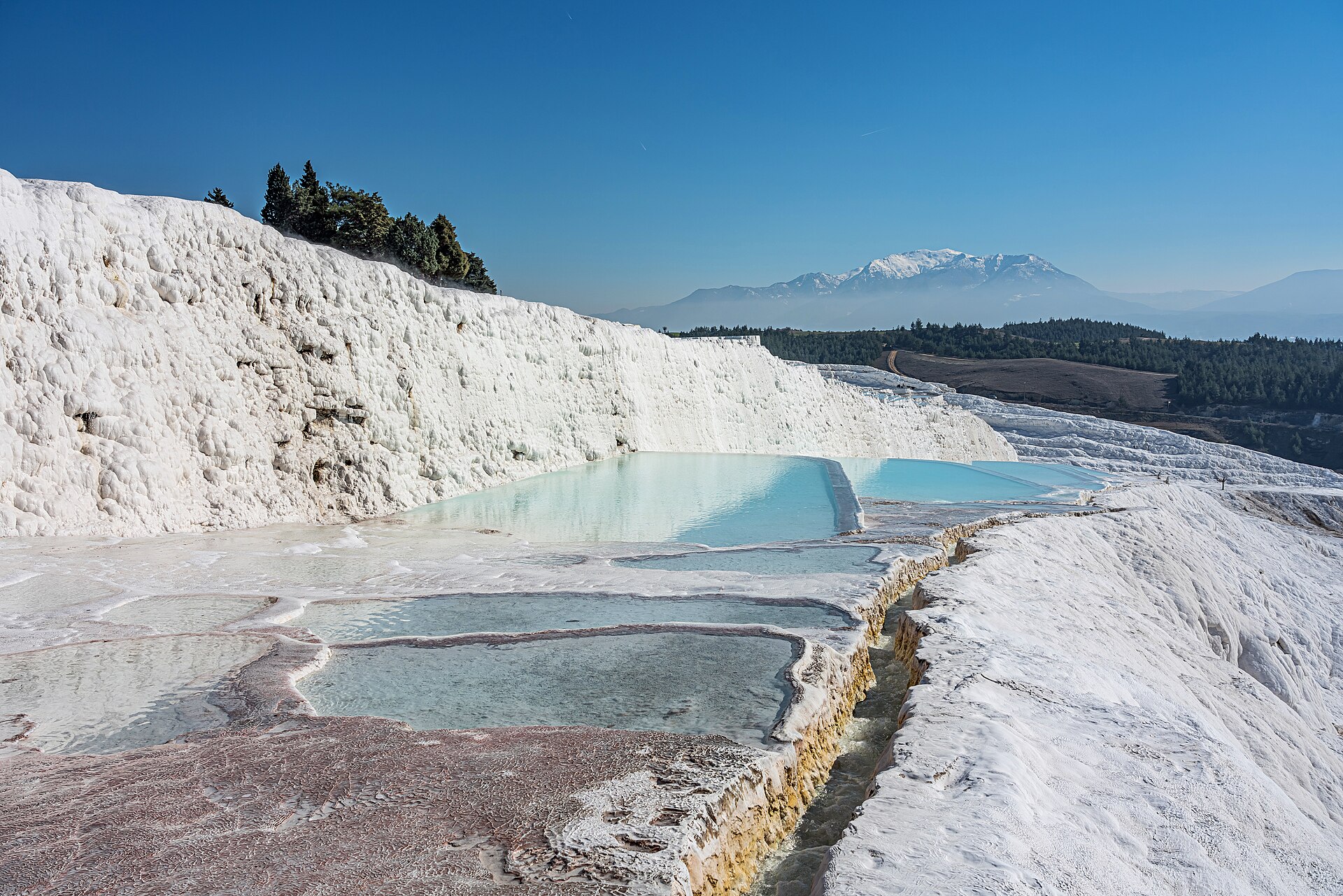
The white slope is the reason most people come. It is travertine — rock left by calcium-rich thermal water depositing as it cools on its way downhill — and it is a protected surface, which drives the one rule you cannot get around: you walk on it barefoot. Shoes come off at the edge and you carry them, padding up and down the single marked path in bare feet.
Take this slowly. Where water runs over the travertine it is smooth and genuinely slippery; where it has dried it is chalky and firmer underfoot but can be sharp. Expect a mix. And don’t count on wading through pool after pool: the terraces are filled and drained on a managed rotation, and the amount of water shifts with the season, so some sections will be full and shallow enough to wade, others merely wet, and some completely dry. That is normal and not a sign you have come on a bad day.
Hierapolis above the terraces
Walk to the top of the white slope and you reach the plateau, where most visitors are quietly surprised to find a large ancient city. Hierapolis was a Greco-Roman spa town built around these same hot springs, and its ruins are extensive, flat and easy to explore.
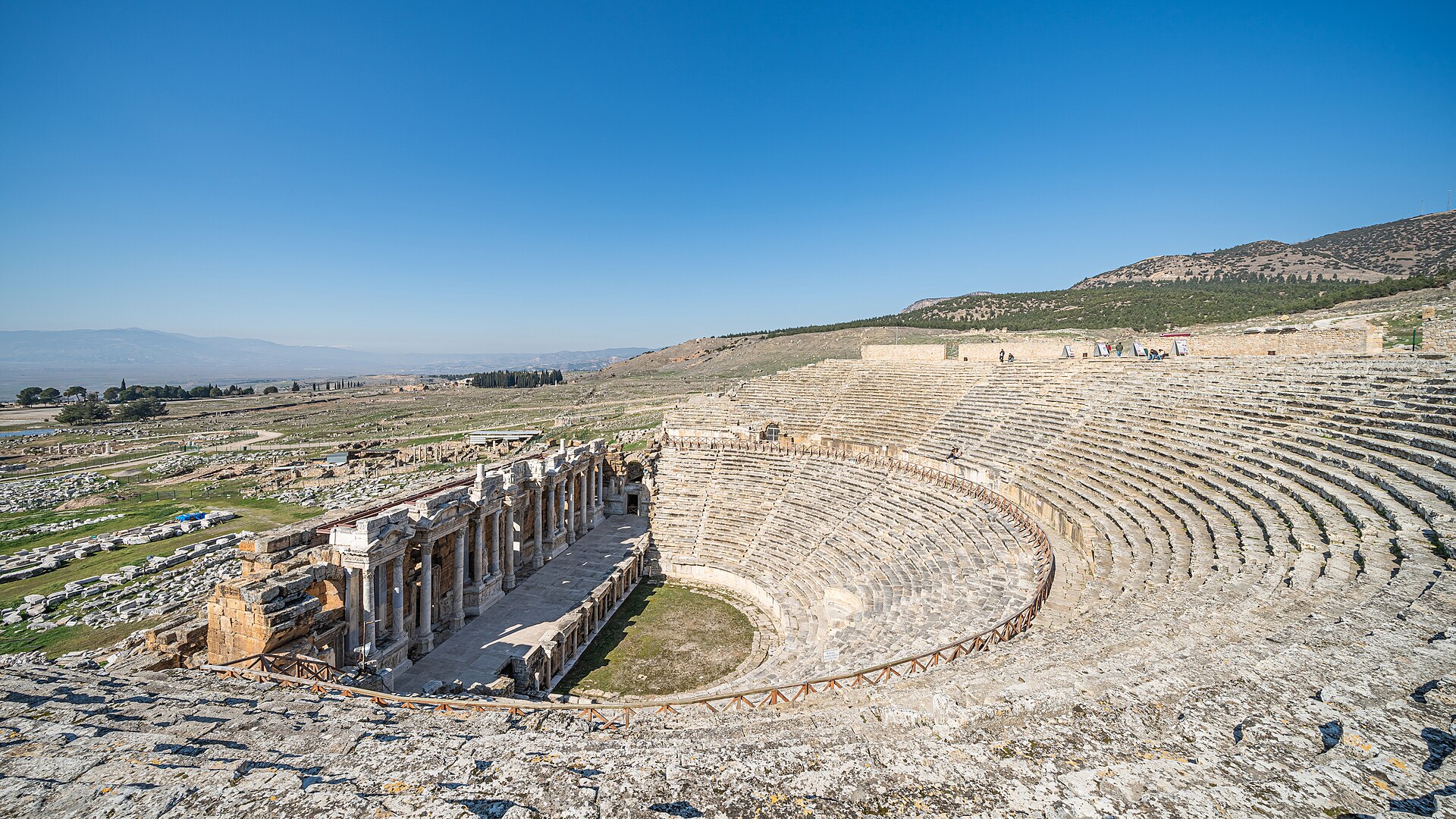
Head for the theatre first — a big, well-preserved Roman auditorium built into the hillside, with much of its seating and carved stage front intact. From there, wander the necropolis, one of the largest ancient burial grounds in the region, where hundreds of tombs and stone sarcophagi line the old roads out of town. A small museum sits in a set of restored Roman baths. Leaving without seeing Hierapolis is the most common Pamukkale mistake; give it an hour or two.
Cleopatra’s Pool
On the plateau you will also find the Antique Pool, sold everywhere as Cleopatra’s Pool. It is a separate, ticketed thermal pool where you can swim among broken marble columns that fell into the water in an ancient earthquake and were never cleared. Floating over submerged Roman stone in warm mineral water is the appeal. Be realistic, though: it costs extra on top of your site ticket, and it gets crowded. Bring swimwear if you want to go in.
The three gates
Pamukkale has three entrances, and which one you use matters. The town (lower) gate sits at the base of the hill and leads you straight onto the terraces, so you walk up the white slope and reach Hierapolis at the top — the most scenic approach, and the natural choice if you are staying in Pamukkale town. The South and North gates sit up on the plateau, delivering you into Hierapolis first, with the terraces reached by walking across the ruins; these are the ones coach tours tend to use. Any gate gives you the whole site on one ticket, but the town gate is the one to aim for if you want the classic bottom-up terrace walk.
When to go
Spring and autumn are the comfortable seasons — warm without the punishing inland summer heat. There is very little shade either on the terraces or across the open ruins, so in high summer the middle of the day is hard going; come early or late and carry water and sun protection whatever the month.
Time of day matters as much as season. Day-tour coaches converge around midday, which is both the hottest and most crowded stretch. Early morning and late afternoon are calmer and better lit, and sunset on the white travertine, with the water catching the colour, is the site at its finest.
Day trip or overnight
Most visitors come on a day trip from the coast — Antalya, Kuşadası or Selçuk near Ephesus, or Fethiye — each two and a half to four hours away by road, each way. That is a long day for a site you can walk in a couple of hours, and it lands you there in the busy midday window.
Staying overnight in Pamukkale town or the thermal village of Karahayıt changes the visit. You can be on the terraces early or at sunset, avoid the worst of the crowds and heat, and skip the long drive back. If Pamukkale is a genuine stop rather than a photo between other places, the overnight is worth it. Either way, start with the Pamukkale overview, compare Pamukkale tours, and check where to stay before you book.